A car is not in the fleet until someone types it in
Every rental, every price and every upsell depends on a correct vehicle record. New cars arrived as supplier descriptions, abbreviations included, and each one had to be matched by hand to a catalogue model, an exact version and the purchase contract it belonged to. Until that happened, nothing downstream could use the car.
The first thing I did was build the baseline from the data. From the first time a vehicle was mentioned to the moment it was created, the median was 26 days.
Make the form unnecessary for every car the system can already recognise
The obvious brief was a faster data-entry screen. I changed what the product is: a matching engine that reads the supplier's text, plus a review queue where people handle the exceptions. People stop typing and start reviewing.
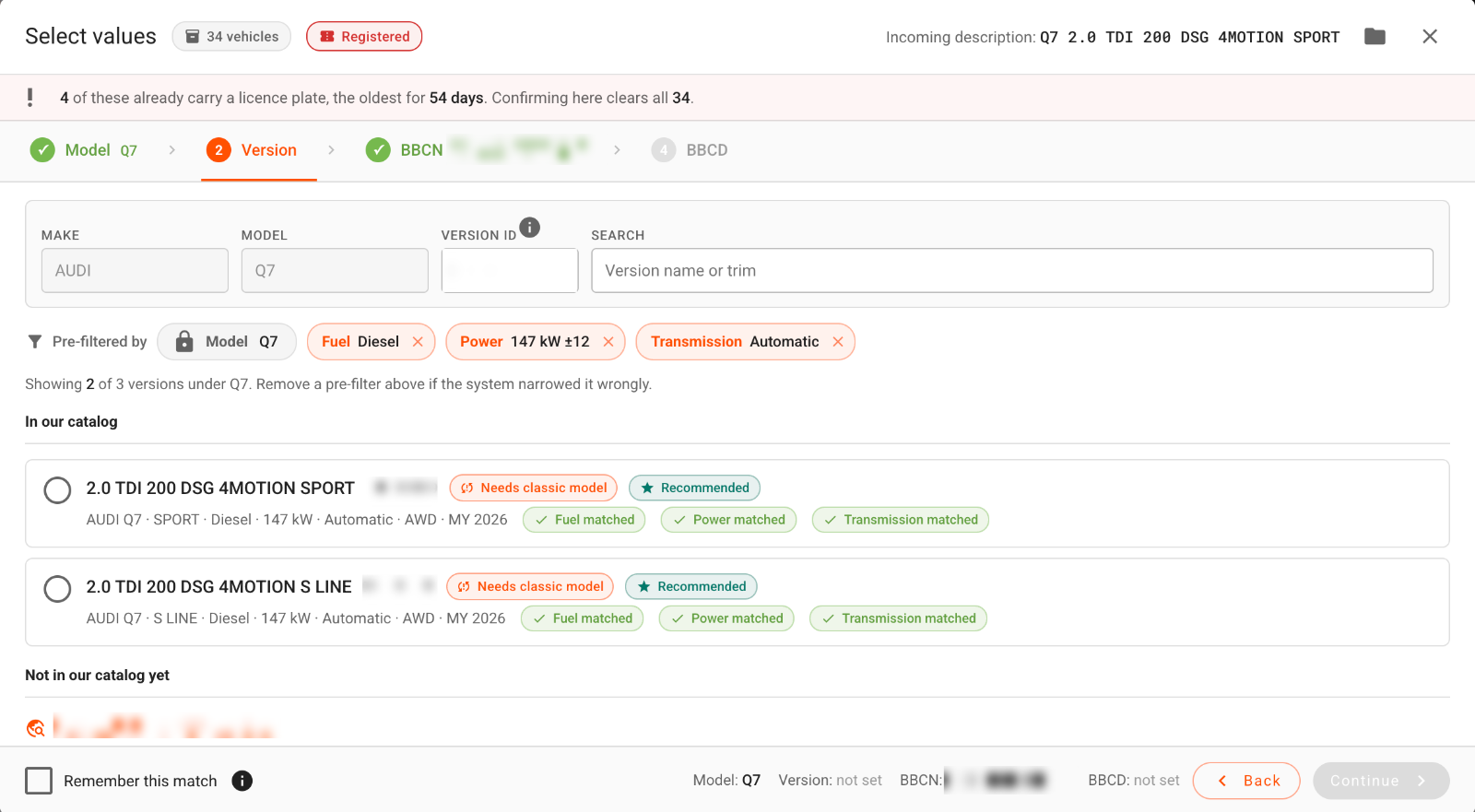
Q7 2.0 TDI 200 DSG 4MOTION SPORTThe vehicle as the supplier describes it.
Resolved against the catalogue.
Narrowed by fuel, power and transmission read from the text.
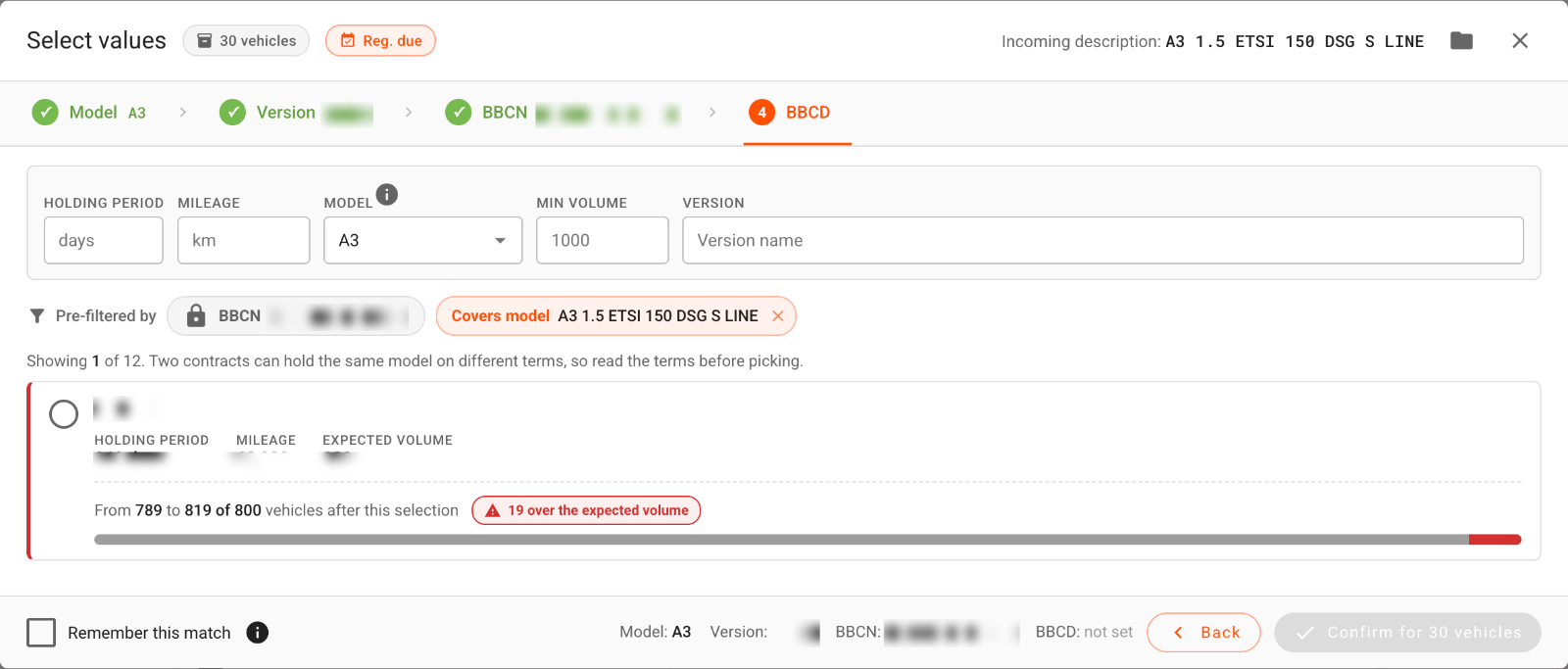
Assigned to the purchase agreement it belongs to.
In bulk, with the system's reasoning on screen.
Four design choices did most of the work
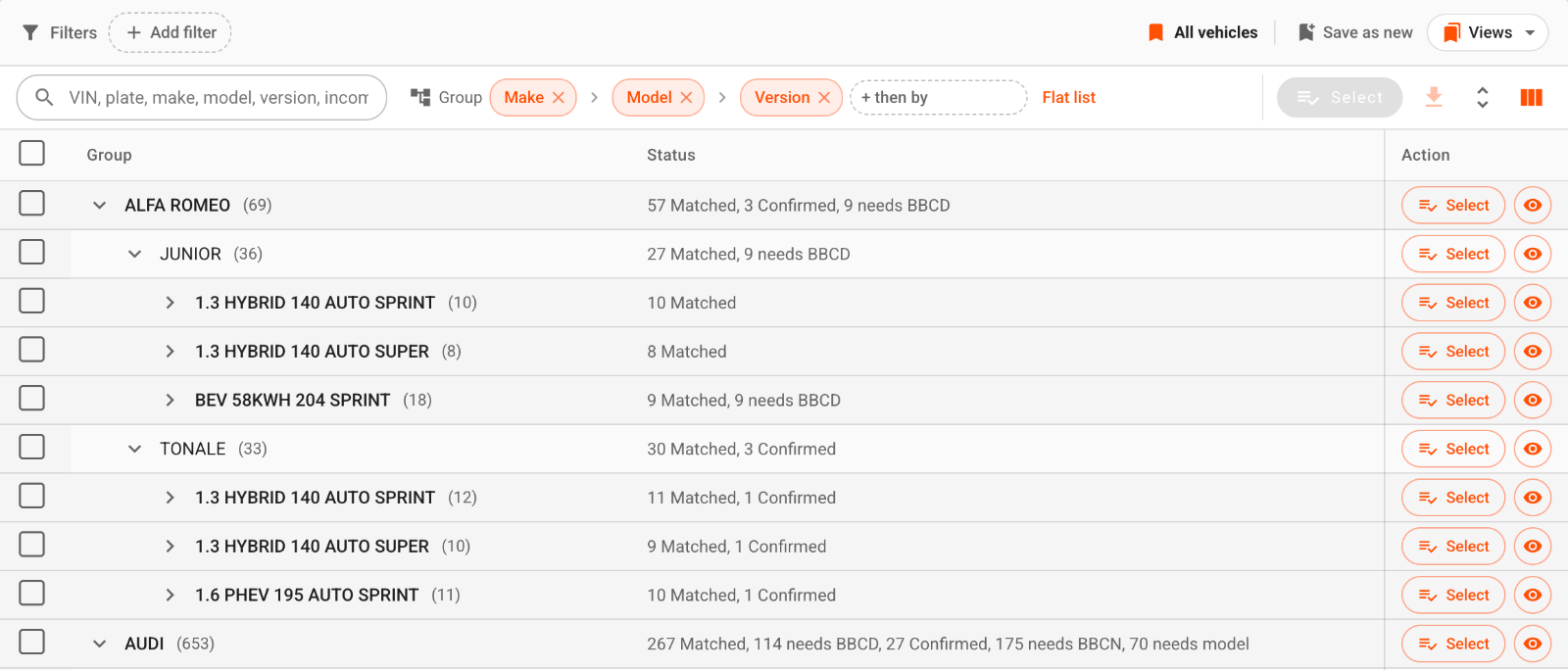
- Group, then confirm in bulk. Exceptions are grouped by make, model and version, so one decision clears dozens of identical cars at once.
- Explain every pre-filter. When the system narrows the options, it shows why, and the reviewer can remove a filter that narrowed wrongly. Reviewers trust a suggestion when they can see why the system made it.
- Guardrails before the click. If a selection would push a contract past its expected volume, or the cars already carry a licence plate, the reviewer sees it before confirming.
- Every confirmation teaches. A reviewer can tell the system to remember a match, so the same description never reaches a human twice.
PrototypeExcerpt: the review queue
PrototypeExcerpt: the contract step
My part: a measured test
I built the baseline, framed the proof of concept as a measured test rather than a demo, and used an AI-assisted evaluation to check the matching against real cases before anyone argued about it in a meeting. I now lead product development towards the first market launch.
Prototyping with AI was the fastest way to get operations and engineering to agree on the same picture. A working flow on the table settles a debate faster than any document.
What I took from it
Measure the wait before designing the cure. Without the 26-day baseline this would have been a nice-to-have usability project. With it, the work became a business question with a number attached.