"Am I contributing to this?"
When I joined ConnectPro I had four questions nobody could answer in one sentence. What does ConnectPro have to do to reach its vision? What can only ConnectPro deliver? How do we create and exchange value? And, for every person on the team: am I contributing to this?
The answers were spread across files, documents, conversations and business rules. They had to become one structure everyone could read.
No epic without a metric, no metric without an event
Desirable, viable, feasible, mapped on one canvas.
One North Star, broken into the levers teams can move.
Every epic carries its success metric and its leanest scope.
Standard events, mapped next to the screens that fire them.
Automated dashboards anyone can read in five seconds.
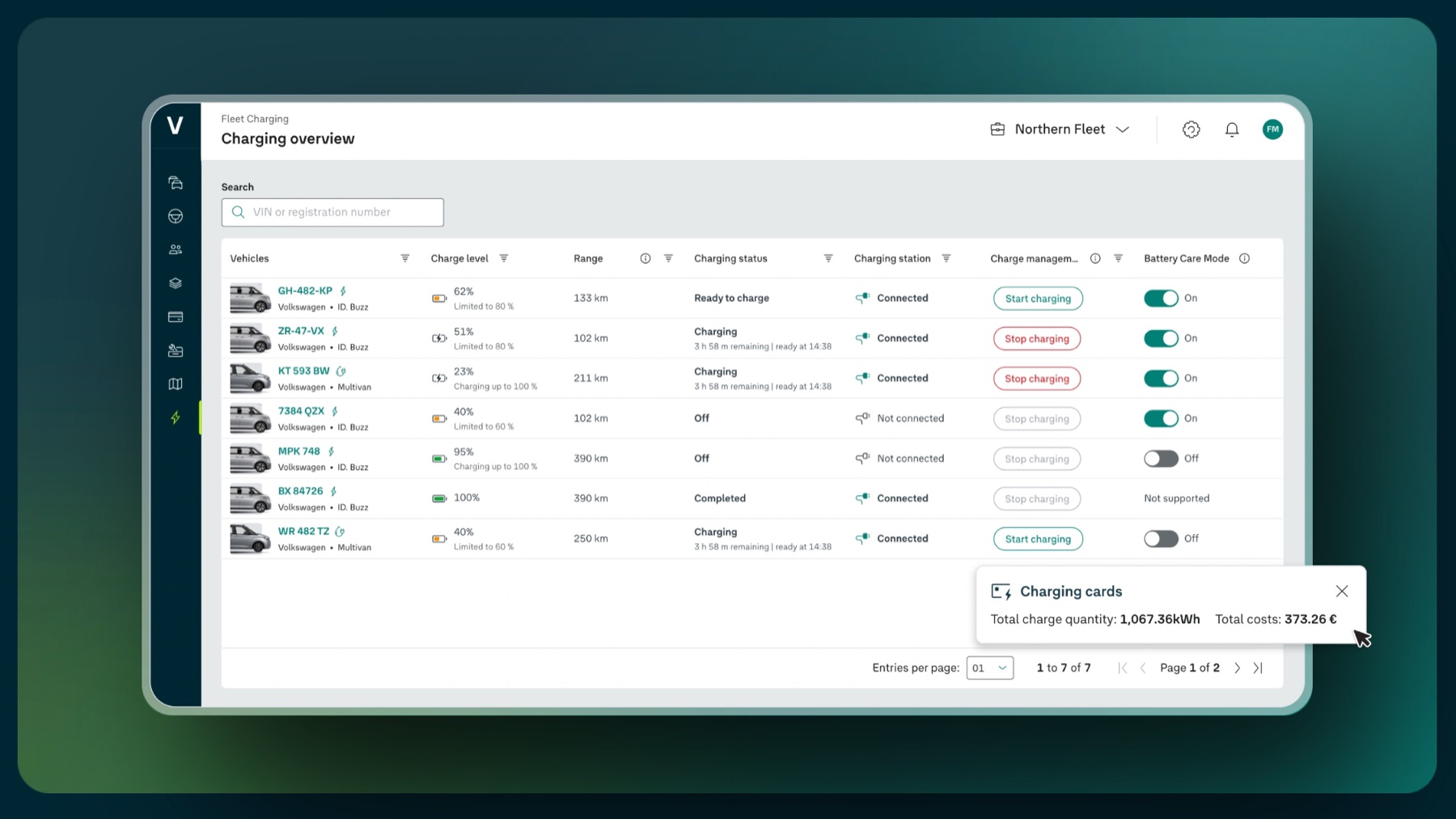
A charging-card epic, for example, was measured by the cards purchased through the product and the energy charged with them. "Feature shipped" did not count.
The same structure set our prioritisation lens. We avoided work with low reach on an already small user base, or low impact because users could already get it elsewhere, and we validated desirability and viability before asking whether we could build it.
Running the team on it
Imagine a football match where nobody knows the score. Knowing if you are winning changes how you play.
A metrics system nobody looks at is a museum. I ran the team on the 4 Disciplines of Execution, a method I first used running AIESEC in Portugal, where it helped grow sales 79% across 4 product lines.
- Focus on the wildly important. Three objectives, in plain language, about what to achieve and never how.
- Act on lead measures. Key results are lag measures. Teams commit to the levers that predict them and that they can actually influence.
- Keep a compelling scoreboard. Anyone should be able to tell in five seconds whether the team is winning.
- Create a cadence of accountability. Every two weeks: report on commitments, review the scoreboard, clear the path and commit again.
In 2024, 8 of 9 team goals were achieved and 6 were overachieved, an average of 161%. Activation went from 47% to 62% in six months. As Head of Product I took the same outcome model to 8 teams and scaled the reporting stack to 100+ people across 2 countries, with a single North Star, a standard event taxonomy and automated KPI dashboards.
What I took from it
- Be the role model first. When the leader skips the cadence, the team does too.
- Write goals in sand, especially before go-live. They will change, and that is fine.
- Take it beyond the product team.
- Keep only the measures the team can act on.
I have since given this as a talk at UXDX, at Volkswagen in Hannover and inside VWDS: watch it here. Where it started: running AIESEC in Portugal on 4DX.