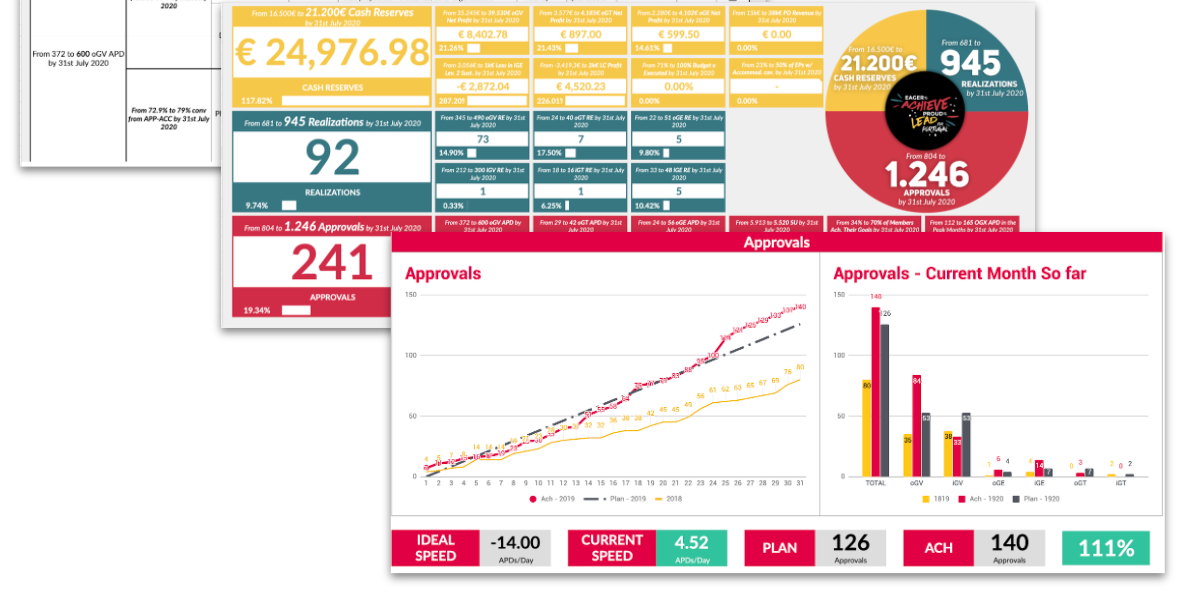
Goals lose to the whirlwind
The whirlwind is the urgent work that lands on your desk and acts on you. Goals only move when you act on them. Most teams cannot name their goals, either because there are too many, because nobody keeps score, or because there is no routine to come back to them.
I wanted a plan every department could see itself winning, so the departments had to write it with us.
I ran the planning like a design sprint before I knew what one was
A friend running AIESEC in another country had used the 4 Disciplines of Execution the year before. I learned from his wins and failures, read the book, and built an agenda of eight days: five before the international conference and three after, across context, operations, 4DX, strategy, network and the team itself.
Looking back, it mapped almost step for step onto a design sprint. Understand the context with the users' journey, interviews, an empathy map, PESTLE and SWOT. Define the goals. Let each department sketch its own plan. Decide in rounds of open feedback. Prototype the accountability system. Validate it in the field.
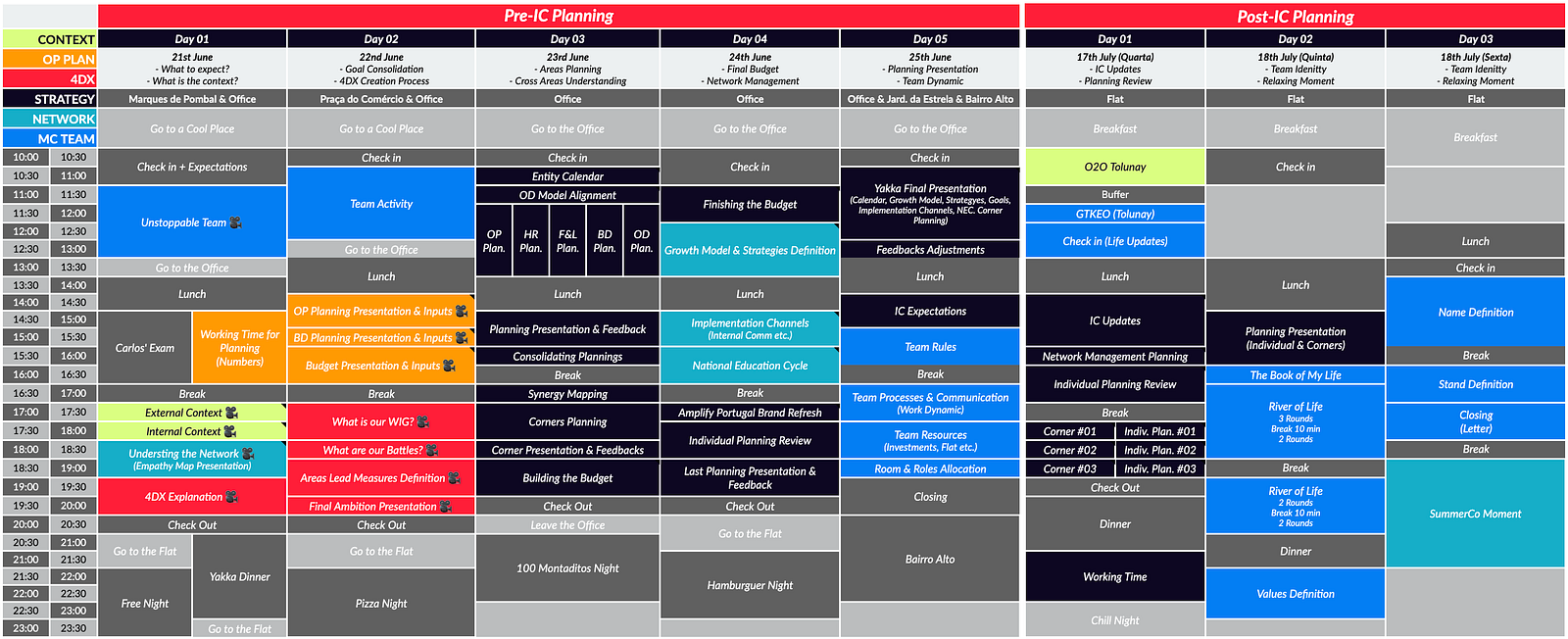
Every department goal traced back to one of three
I adapted 4DX so the whole team pulled on the same rope. Each team goal, a Wildly Important Goal, broke into one battle per department: the same indicator, the department's share of it. Each battle got its lead measures, each lead measure its strategies, each strategy its own KPI. One rule held it together: every battle had to feed a team goal.
- Team goalFrom X to Y by when
Three for the whole country, chosen by the team.
- BattleOne per department
The same indicator, and the department's share of it.
- Lead measureWhat predicts the battle
The levers the department can actually move.
- StrategyHow each lead measure moves
The work behind each lever.
- KPIOne per strategy
Reviewed in the weekly session.
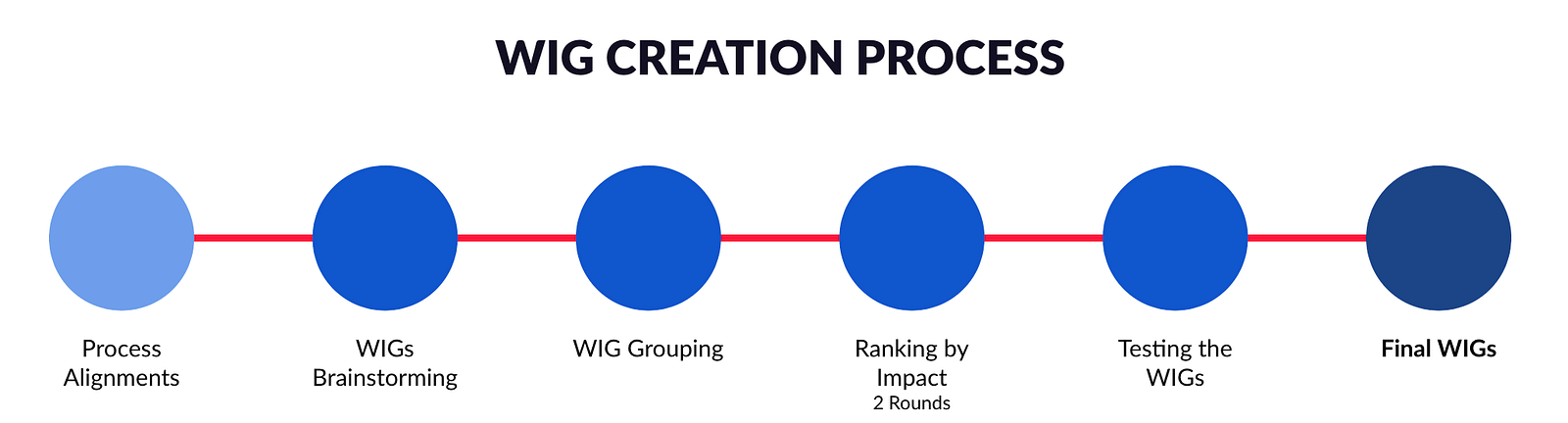
Choosing the goals was a facilitated process. Everyone wrote candidate goals for five minutes, already in the form "from X to Y by when". We grouped duplicates, ranked them from 1 to 10 by impact after agreeing what a 1 and a 10 looked like, ran two rounds, and tested the finalists with four questions: is the whole team behind it, is it in the structure, can everyone understand it, and does it say what to achieve without prescribing how. Three hours later we had our goals, battles and lead measures.
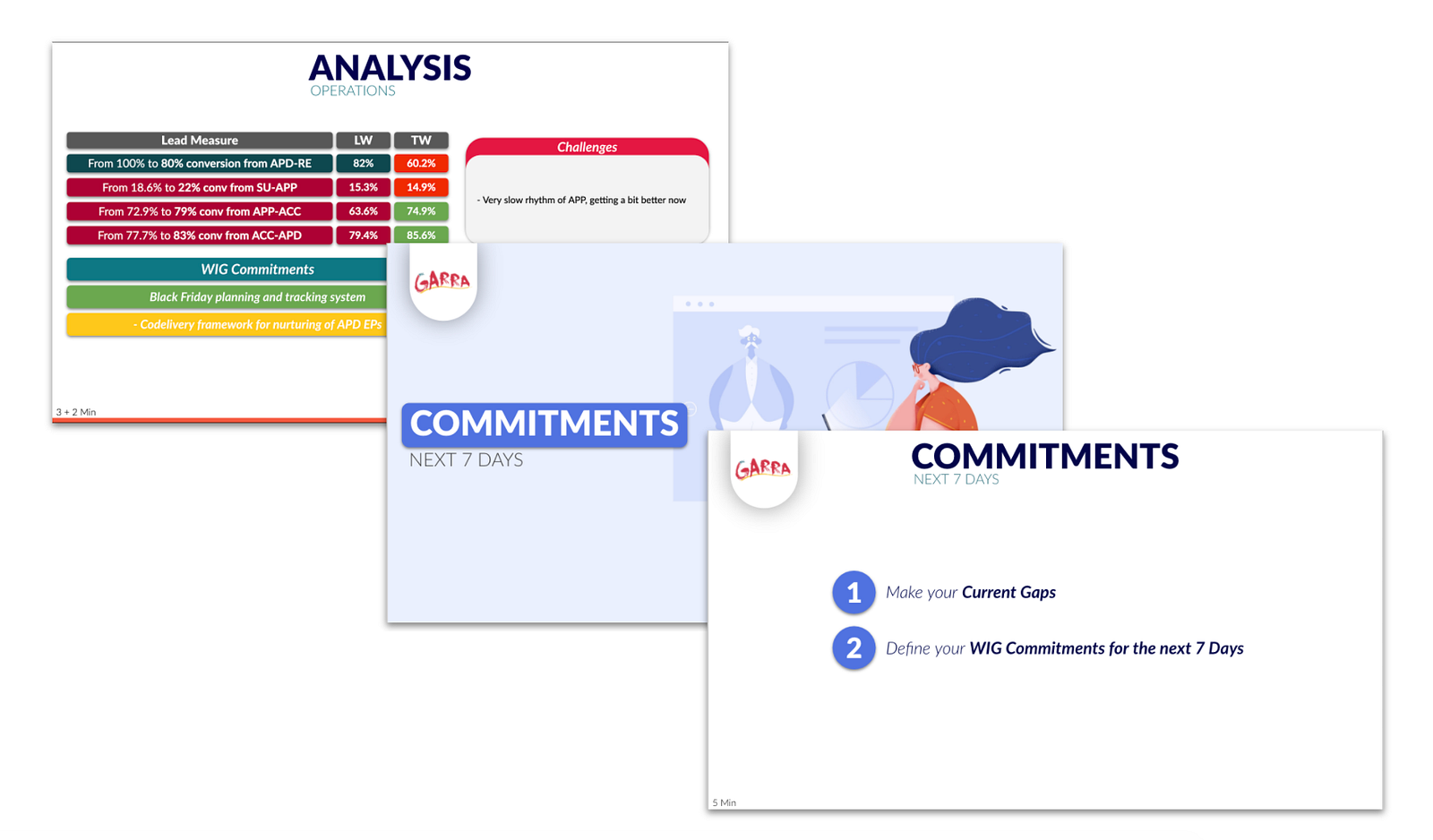
The weekly session tested the plan
I added no new meeting. I rebuilt the weekly one around the goals: team and department progress first, then each department's lead measures against last week, then everyone's commitments for the next seven days, three at most, tracked in their own channel.
The accountability system changed five to eight times in the first two months. Every week I looked at what worked and changed what did not. When the team could not tell in five seconds whether it was winning, I fixed the scoreboard.
Six months into a one-year plan
| Team goal | Plan achieved | Growth, year on year |
|---|---|---|
| Goal 1 | 78% | +27% |
| Goal 2 | 101% | +11% |
| Goal 3 | 105% | +79% |
Did the method cause it? I wrote at the time: maybe. It helped a lot, and the daily work did the rest.
What I took from it
- Treat frameworks as a buffet. Take what fits the team in front of you and adapt the rest.
- Earn the trust before the method. I spent an hour explaining why before we used any of it. People follow a process when they trust the leader to run it.
- Be the role model. 4DX runs on discipline. When the leader skips the routine, the team does too.
The full story, as I wrote it in 2020: Design Thinking: how I used it to guide my team's planning process, and the primer behind it, 4 Disciplines of Execution and how it'll help you achieve your goals. Where it went next: one scoreboard for ConnectPro.