My own receipts killed the obvious idea
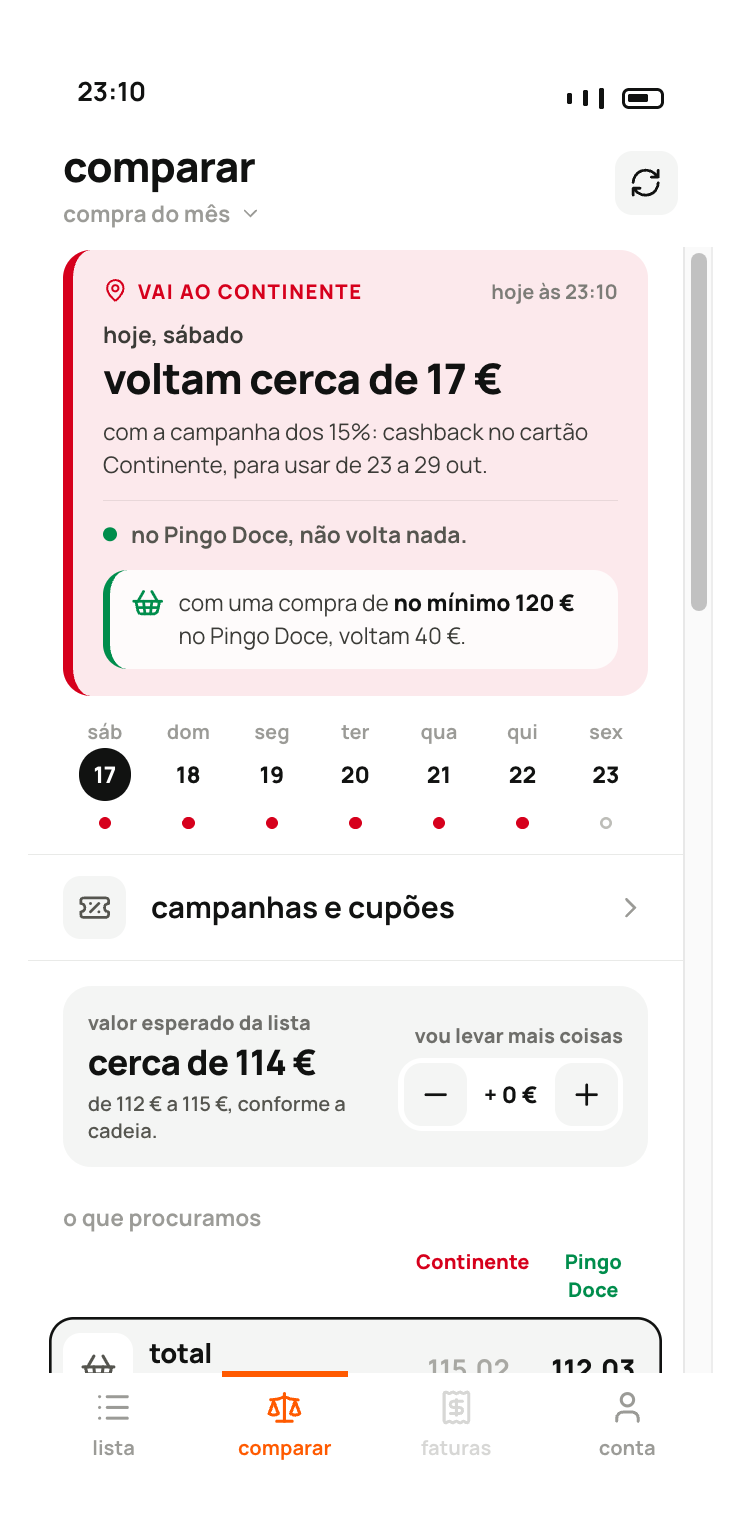
I started with my own data: every supermarket invoice my household had, decoded into what each word on our list actually meant. The first finding: most products cost the same at both chains. A price-comparison app would have been built on a saving that barely exists.
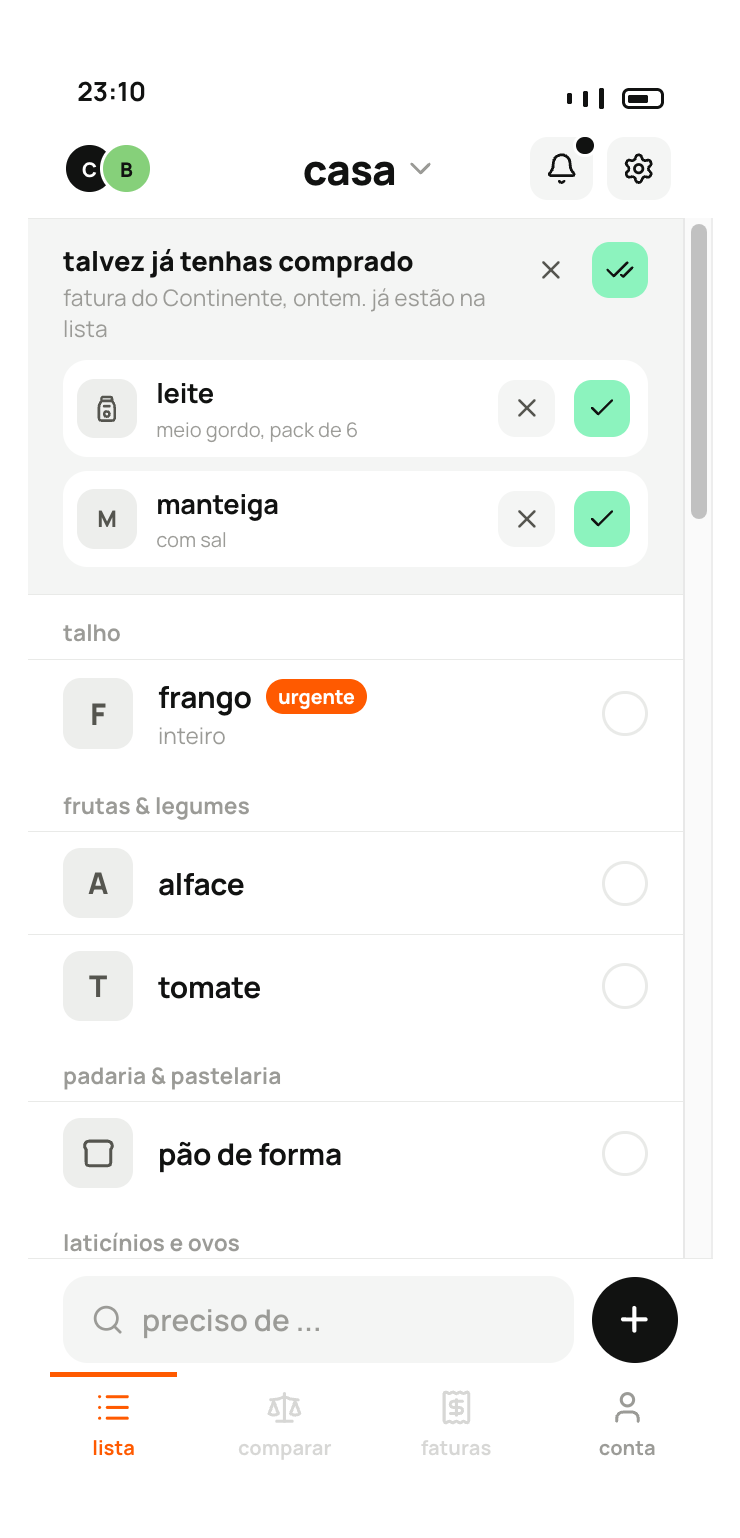
The real cost is attention. A grocery run is the same repertoire week after week, with almost no decisions in it, and it still takes a trip's worth of thinking. Despensa's value is a list that is right the first time.
So price shows up as what your list costs at each chain, never as "you saved". The moment we promise savings, the data starts arguing with us.
Forward a receipt, never hand over a mailbox
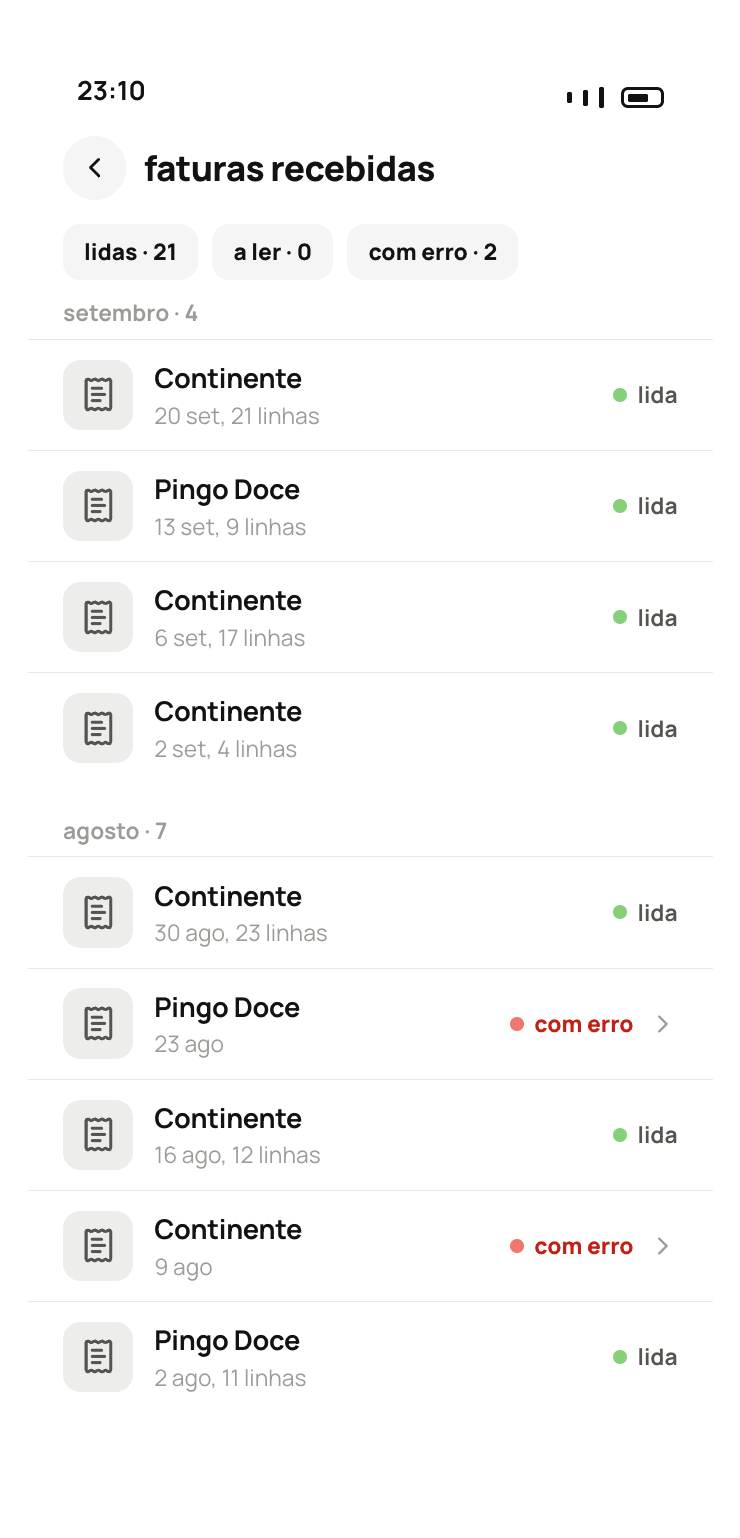
Receipts arrive by forwarding them to the list's own address. We decided early never to ask for read access to anyone's mailbox. A product that wants to sit inside a household has to earn trust before it asks for any.
Two people and three agents, building from one spec
Two repositories with one rule between them. The spec owns what the product does and why: capabilities, the domain model, screens, decisions and open questions. The app owns how it is built. If they ever disagree, the spec wins.
- Three AI agents with one job each. A product owner writes the what and why, an architect owns the technical how, and an analyst checks what is actually true in the code before anyone argues about it.
- Decisions on record. 44 so far: 25 on the product, 19 on the architecture.
- Questions become cards. Every open question is written down as a card instead of settled in a hallway: 40 so far.
- Prototype first, spec second. Nine prototype rounds and 75 screens before a line of product code. One round deleted a whole feature the spec had been asking for; another moved the price gap in our worked example sixfold.
- Built in layers, reviewed between each. Vocabulary and decisions, then capabilities, then the domain model, then screens, then code.
The agents draft and check. The two of us decide.
What I took from it
Nine prototype rounds before any product code felt slow at the time. Each round caught a mistake one layer up, where it was far cheaper to fix than in code.